Start the Learning Before You Finish the Planning
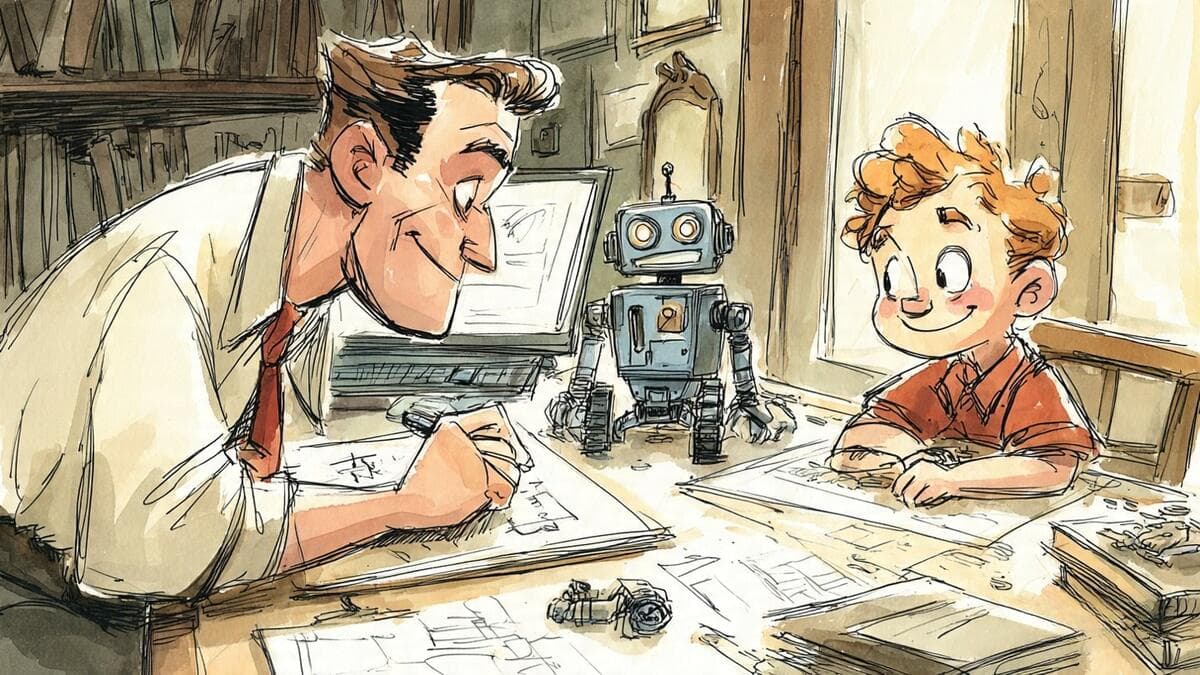
Your kid wants to build a robot, and you have never built one.
The polished homeschool robotics curricula cost hundreds of dollars, and that price is not an accident. Robotics is a hole in the homeschool shelf, and the few real options know it. You can stare at that hole for six months, researching, waiting for the right curriculum to appear. Or you can get a kit delivered and start right away.
The second option is a move that keeps showing up in homeschool families who end up somewhere surprising: they start learning before they finish planning. The learning itself buys the time they need to build the rest of the plan.
Start with whatever you can grab today
Your kid is interested today, not next month. If you wait until you have the right books, the right scope and sequence, and the right vetted curriculum from the right homeschool blogger, the interest might not still be there when you are ready.
So start with what you can get your hands on this week.
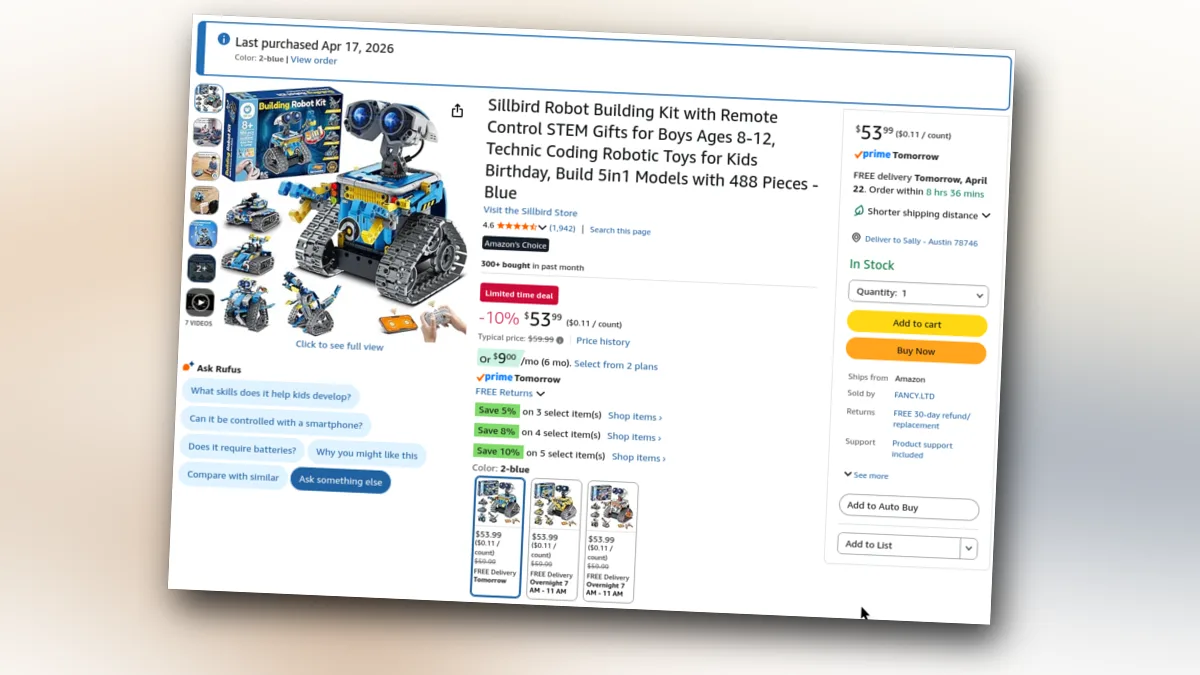
For the kid who wants to build a robot, buy a starter kit on Amazon.
For the kid who wants to keep bees, grab a beekeeping book from the library and a junior veil from a supply shop.
For the kid who wants to start a business: hand them a twenty, walk through Target's dollar section, and ask what they want to sell first.
Your only job right now is to put something real into their hands in the next three days. That is all.
Use the starter project to buy yourself time
Here is the mechanic that makes this work.
The starter project is a time machine.
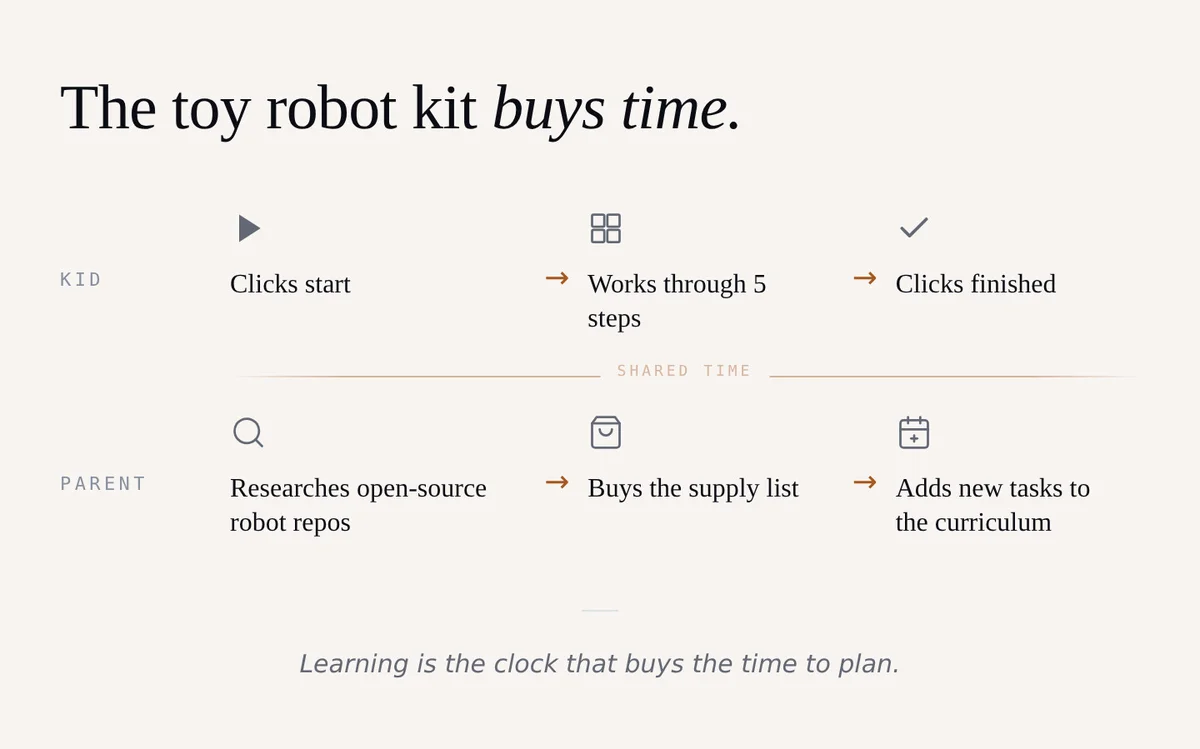
While your kid is building the Amazon robot, you are opening tabs. You are figuring out what serious amateur robotics people actually use, whether the next step is Raspberry Pi or Arduino, and what books the homeschool parents in robotics forums swear by. You are mapping the ladder from plastic-gear toy to a robot that can dance when you talk to it.
None of that research has to happen before your kid starts. It happens while they start.
That is the move. An easy starter project holds your kid's interest for a week or two while you build the next layer in the background. The curriculum compounds. The kid stays in flow the whole time. You bought the time, and you are spending it on purpose.
Break the starter project into sessions that feel complete
Let's say an Amazon robot kit comes with twenty steps in the booklet.
Twenty steps is too many for one sitting. Five steps is a session. Five steps is finishable. Five steps ends with a click and a real feeling of "we did a thing today."
Scan the booklet. Drop the scan into an AI chat. Paste in the Lesson Hollow guidance for LLMs on building a curriculum. Ask the AI to turn the twenty steps into four tasks of five steps each, sized for a 20 to 30 minute sitting.
You now have a curriculum you did not write. You have a spreadsheet of four tasks. Upload it to Lesson Hollow (50 cents for the upload, which allows for hundreds of tasks), and your kid has four sessions waiting for them on the Plan page.
Session one, they finish the first five steps, hit complete, and feel done even though they are only a quarter of the way through the robot. That feeling is the point. It is the fuel for session two.
Keep the curriculum alive, not locked
Here is the part families often miss.
A curriculum is not a contract you signed with your kid's future self on the first Monday in September. A curriculum is a path. You put things in. You take things out. You drop pleasant surprises into it to keep things interesting.
Say your family is studying prehistory. The local IMAX just announced a screening of Cave of Forgotten Dreams next Tuesday. You open Lesson Hollow, go to the right curriculum details page, and drop in one task: "Go see Cave of Forgotten Dreams in IMAX. Get popcorn."
Your kid opens the Today page on Tuesday morning, expects another school day, and finds a movie with popcorn instead.
That is a curriculum doing its job.
What to do tomorrow
Pick the one thing your kid keeps circling back to.
Get the simple version of it into their hands this week. It does not have to be the perfect curriculum or the one the homeschool forum recommends with seven stars, just the easy thing you can put on the table.
Break the first activity into small sessions. Use an AI if you want speed.
While they complete those first learning tasks, do your research. Find out what serious people in this field use, what books and tools they rely on, and what layer sits above the starter project.
Tomorrow, add five more tasks to the curriculum. Next week, add five more. Delete the ones that fell flat. Drop in the ones the world hands you.
Learning is the fuel that makes the rest of the plan possible. Once your kid is moving, you finally have the information you need to build something real: you have seen what they respond to, what they skip, what makes their eyes go wide.
So start before you are ready. Put the robot kit in their hands this weekend. The curriculum will catch up.