A New Pastime for List Builders
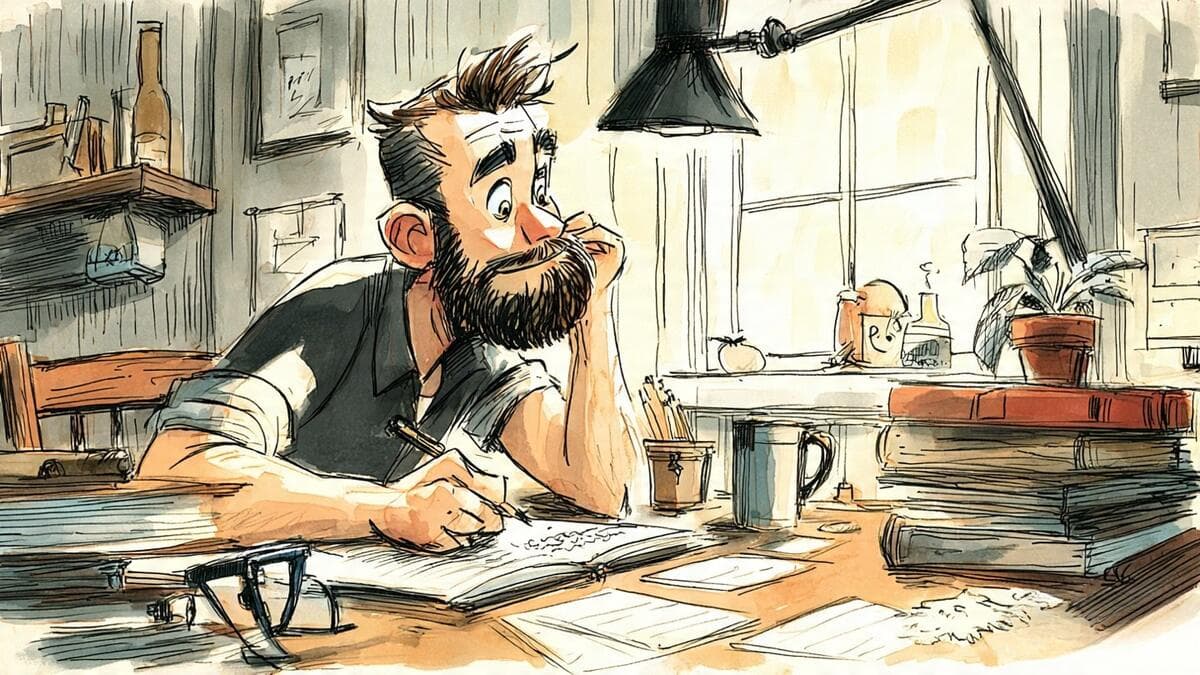
Some people relax by shopping. Others relax by rearranging furniture. A surprising number of us relax by making lists.
Grocery lists and chore lists do not count here. The list-builder hobby lives somewhere else entirely: book recommendations sorted by season, reading sequences for a subject you want to learn properly, a ten-film lineup for a rainy weekend, a list of bird books that actually make backyard watching feel magical, or a month-by-month listening plan for a single decade of music.
If that description just named your ideal Saturday morning, you are a list-builder, and there is a new pastime waiting for you with more authorship than Goodreads or Letterboxd have ever offered.
In this post I will show you why curation feels so good in the first place, what separates a great list from a merely long one, and why the list-builder instinct points directly at a particular kind of project that has been sitting in plain sight.
The list-builder is a real personality
You can spot a list-builder easily once you know the signs. This is someone who would rather build a Goodreads year-in-review than talk about a single book. Someone who keeps a Letterboxd account with ranked mini-canons by decade, director, and mood. Someone who maintains a personal spreadsheet of every book they have read since 2012, or every film, or every restaurant, or every album they have listened to more than three times.
The outward hobbies vary while the underlying pleasure stays the same. A list-builder gets a quiet, steady satisfaction from organizing the world into sequences that say something about taste, memory, or intent.
Goodreads has well over a hundred million users because this instinct is common. Letterboxd thrives for the same reason. The cultural surface has changed across eras (literary anthologies, mixtapes, zines, commonplace books, blog rolls, playlists) and the instinct underneath has stayed remarkably steady.
Why curating feels so good
A great list delivers more than practical help. Curation meets a handful of very human needs at once, which is why this hobby never really goes out of fashion.
A good list imposes order on abundance. The world offers more books, films, recipes, articles, podcasts, courses, and ideas than any person could possibly get through, and that volume is its own kind of pressure. A curated list says, here is one shape through all of it. That shape lowers the cognitive tax of having too many options, which is a real form of relief for an overstimulated mind.
A good list also makes room for authorship. The list-builder chose this book over that one, chose this sequence, chose to leave that other one out. Every inclusion is a quiet act of taste, and every exclusion is a quieter one. Over time, a personal ranking system starts to feel like a self-portrait made of choices.
A good list turns solitary taste into something shareable. Most private preferences stay private for lack of a frame. A list gives them a frame. It says, here are my ten. Here are the fifteen books I would give a teenage boy who loves engineering. Here is the path through the jazz records for someone who finds jazz intimidating. Suddenly taste becomes a gift.
All of that is why so many list-builders describe the act of curating as restful. The rest comes from arranging the world.
A great list is an adventure, not an inventory
Here is a small test. Imagine two lists with the same title, "ten books on ancient Rome." One is an alphabetized rundown of the top ten most-cited titles on the subject. The other has an order, a theme, and a stated point of view, something like, "these ten books, in this order, will leave you actually curious about Rome rather than dutiful about it."
Both are lists. Only one is doing real work.
The difference is intent. A great list is planning an adventure. It says: here is how to enter this subject. Here is the mood I want you to encounter first. Here is what to read before that chapter hits, what to skip on a first pass, and what to save for a second visit. A great list has omissions with reasons behind them, and a sequence that implies, quietly, that the maker has walked this path.
That is why a twenty-title list built by a friend who knows the material often beats a two-thousand-title search result from the library catalog. The list proposes a way through. The catalog proposes a pile.
Good list-builders tend to know this instinctively, even when they describe what they are doing as just "making a list for fun."
List-builders have been around forever
The modern apps are only the latest room for a very old habit.
People kept commonplace books for centuries, hand-copying passages into bound notebooks organized by theme. Anthologists built the canonical poetry collections that still shape taste. Religious communities built lectionaries to sequence their reading across the year. Food writers assembled cookbooks that are, underneath, opinionated lists of what a home cook should have in their rotation. Teachers built syllabi, which are curricula at heart.
Today someone keeps an alphabetical Letterboxd log of every Coen Brothers film they have seen and re-seen, ranked with brief notes, and that feels like a modern hobby. The tools are modern. The underlying behavior, the careful sorting of a beloved subject into a shape the next person can walk through, reaches back centuries.
That reframes list-building from a quirky online-era habit into one of the oldest durable pleasures humans have given themselves. If you love doing it, you are in very good company across a long span of history.
The next room for list-builders is personal curriculum
Here is the hobby that list-builders have been edging toward for years without quite naming it: building a personal curriculum.
A curriculum, stripped of any school association, is simply a list with a destination. It says: here is a path through this subject. These resources, in this order, for this kind of learner, arriving at this understanding.
That sentence describes exactly what a great Letterboxd arthouse starter list is already doing, or a great Goodreads fantasy primer, or a great Spotify jazz-entry playlist. The only real difference is that a personal curriculum states the destination out loud. It says, here is the route, and if you walk it, here is what you will know at the end.
A ranking sorts existing material by preference. A curriculum proposes a journey. It selects, sequences, includes, excludes, and crucially, builds toward something. There is more of the curator's judgment in a curriculum than in almost any other list form.
A personal curriculum can be built for any subject. Medieval Japan. The history of electronic music. What to read before visiting Rome. The order in which a six-year-old should meet the Greek myths. A year of backyard nature study organized by what is in season. A curriculum can be for yourself, a friend, a child, or a hypothetical learner who might one day stumble into your work and walk the same path.
Homeschool parents are professional list-builders
If you want to see expert-level personal curriculum in the wild, spend ten minutes in any serious homeschool community.
Homeschool parents have been quietly running this hobby at professional intensity for decades. Read-aloud stacks arranged by season. Book baskets organized around a historical era. A Charlotte Mason mother's nature study rotation built around what blooms, molts, or migrates each month. The handwritten resource list a second-generation homeschooler keeps of exactly which poetry, music, art, and living books they would want their child to meet between ages six and nine.
These are real, working, personal curriculums. They were built by hand, tested on actual learners, adjusted year to year, and swapped around in private message threads and forums because the list-builder joy of them is half the point.
If list-culture has a hidden graduate school, it might be this one. A lot of homeschool mothers did not discover list-making on Goodreads. They have been doing a richer version of it, with higher stakes and more practice, for a long time.
You can build one for yourself
None of this requires children.
A personal curriculum for yourself is one of the most satisfying projects a list-builder can take on. The stakes are real, the audience is known intimately, and the work of curating it produces actual learning. Every inclusion is a vote of confidence. Every sequence choice is a bet about how the subject should unfold in your own mind.
Consider a few you might already half-carry: the Shakespeare you meant to revisit as an adult, the jazz history you have been meaning to work through properly, the twentieth-century architecture you circle in bookstores but never commit to, the pre-Columbian history you half-absorbed and want to complete, or the philosophy you last touched in college. A personal curriculum is that instinct, written down, sequenced, and given a finish line.
The work of building it is the hobby. The reward of walking it is the bonus.
A curated list still beats any algorithm
There is a quiet reason human-curated lists never got displaced by algorithmic recommendations, even in a world of infinite feeds and infinite search.
An algorithm gives you more. A curated list gives you shape.
Those are different gifts. When a person who loves a subject hands a sequence to a friend, the list carries intention the engine cannot replicate. It has a point of view. It has conviction about what to leave out. It has the small mercies of a guide who has already walked the path, knows the fatigue points, and can say, skip that chapter for now, it will make more sense after the next one.
That is also what a great personal curriculum does. It is a curator saying: I have walked this terrain. Here is the order I wish someone had given me.
Try one yourself
If you recognized yourself in the first paragraphs of this piece, here is the invitation.
Think of a subject you already care about and half-know. Somewhere it has been quietly waiting for the attention you give to your Goodreads shelf or your Letterboxd year in review. Decide what the destination is. Pick the ten or twenty things that best belong in it. Put them in order. Add one note per choice. Save it somewhere you can return to.
That is a personal curriculum. It is the hobby you already had, with a more ambitious shape and a subject on the other side of the walking.
Lesson Hollow is built for exactly these kinds of lists. A personal curriculum lives naturally inside it, alongside any other paths, ready to be walked at your pace or handed to a kid in your life who is ready for the terrain you already love.