Keep Your Curriculum Out of Your Calendar
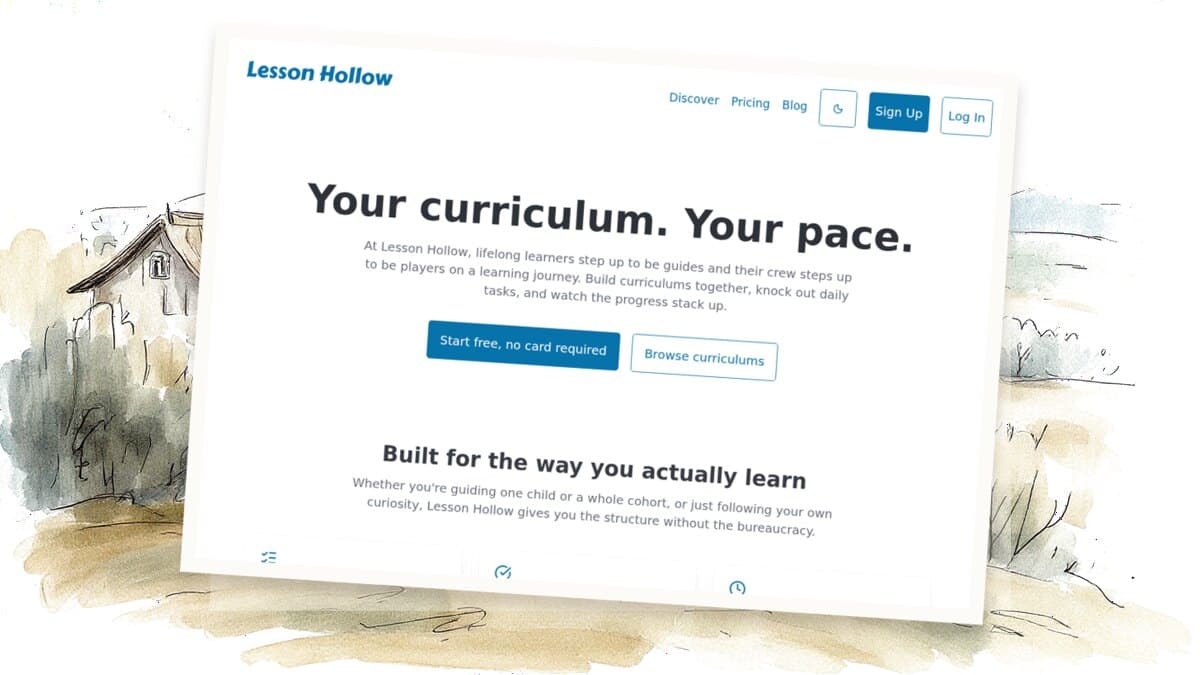
I used to plan our school year in Homeschool Planet.
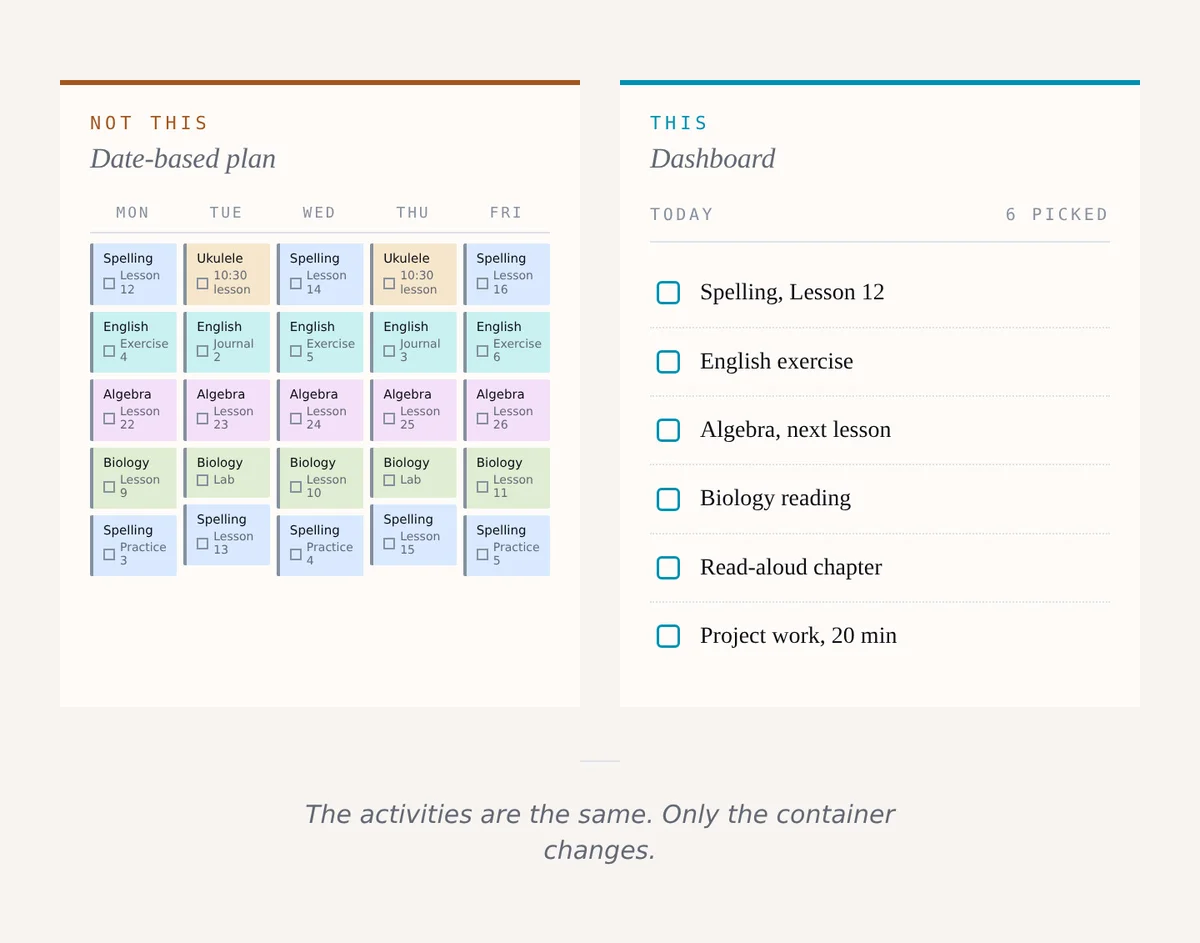
Every math lesson had a day. Every English lesson had a time. Every science activity had a slot. The whole year was mapped out in advance.
Then a field trip to a farm came up.
In Homeschool Planet, that field trip meant rescheduling every single activity. You bump the whole thing forward by a day, and now your year is one day longer than the school year actually has. The only way to finish on time is to work a weekend, because you took a field trip on a weekday.
Then a friend invited the kids to the water slides. We bumped everything forward again.
Then a friend treated us to an IMAX movie. Then a local museum hosted a free day just for homeschoolers. Then one of our kids got sick. Then out-of-town guests came through.
I stopped using Homeschool Planet. The system was just broken. There was too much rescheduling, and it was no fun.
That broken loop is the design problem behind Lesson Hollow.
The calendar is the wrong container for most home learning
Some things really do live on the calendar. A co-op class starts when it starts. A tutor call happens at a real hour. Doctor and dentist appointments need a place and a time. Planned field trips, planned family reunions and planned holidays all sit on the calendar for a reason. If you miss the slot, you miss the thing.
But there's no being late to a math lesson.
The books you read, the videos you watch, the audio you listen to and the things you do at the kitchen table: none of that needs a 10:30 AM Thursday timestamp to count. Pinning that work to dates only creates one outcome. Real life arrives, the dates slip and the planner starts owing you days you don't have.
The curriculum was never the problem. The container kept it locked to dates that were never going to hold.
What goes on the calendar, and what does not
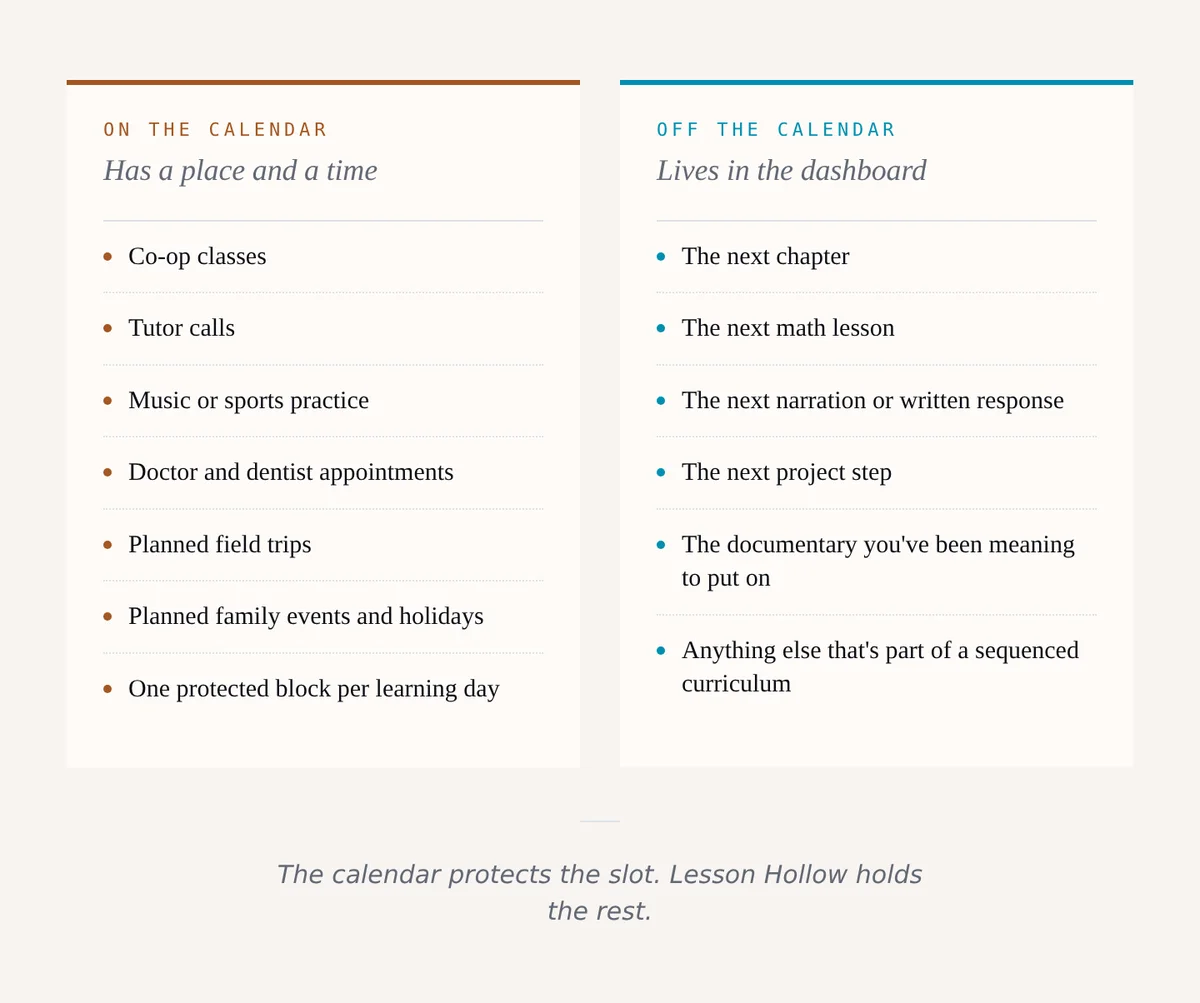
The path resumes when you sit down again, regardless of what's been diverting your attention. The protected block in the left column is the one piece of learning that earns calendar space, and the next section is about how to use it.
Dashboard time is the only block we defend
Here is the move that actually changed our week.
We put one block on the family calendar each day, and that single block carries the whole learning load. We call it dashboard time.
Morning works best, before the day fills up. The block reserves space and nothing else. It doesn't say which lesson or which subject. The dashboard inside Lesson Hollow handles all of that.
When dashboard time starts, you open the Plan tab and pick the activities you can actually finish during this block. Those picked activities populate your dashboard. Then you work until the dashboard activities are done.
The block is the thing you defend. When someone wants you to do something else during it, the answer is, "I have a commitment to my dashboard." That is a much more durable commitment than "I have a commitment to a 10:30 math lesson," because it survives whatever your kids actually need from the dashboard that morning.
Catch-up is just arithmetic
Rigid scheduling hides how easy catch-up actually is, once you stop pretending the dates are real.
Inside Lesson Hollow, your curriculum carries a target finish date and a known number of lessons left. When you miss full days, the system divides what's left across the days you still have. The average lessons per day goes up a little. That's the whole math.
A calendar-based planner can't do this for you, because each lesson is glued to a specific date. Move one and the cascade starts. A path can do it instantly, because the only thing that ever changes is the pace.
Most catch-up weeks need two or three more lessons per day, not a heroic recovery. The dread is bigger than the work.
The interruptions are the point
Looking back, the interruptions that felt like wrenches almost always paid back the time. The park play dates were worth it. The days when friends came over earned their place too. The unplanned outdoor afternoons and the visits to grandparents kept showing up later in what the kids actually remembered. The friendships and the time outside are good for the kids in ways no math lesson on that particular day was going to match.
A planning system that makes you feel guilty about saying yes to those things is fighting the actual reason you're doing this.
To the calendar-heavy planner
If full calendar planning works for your family, keep planning the things that have a time and a place. Doctor's appointments belong on a calendar. Co-op class times belong on a calendar.
For everything else, give yourself one block of dashboard time and let the lessons happen inside it.
You will be surprised how much of the week stops fighting you.