What to Do When a Homeschool Curriculum Starts Going Stale
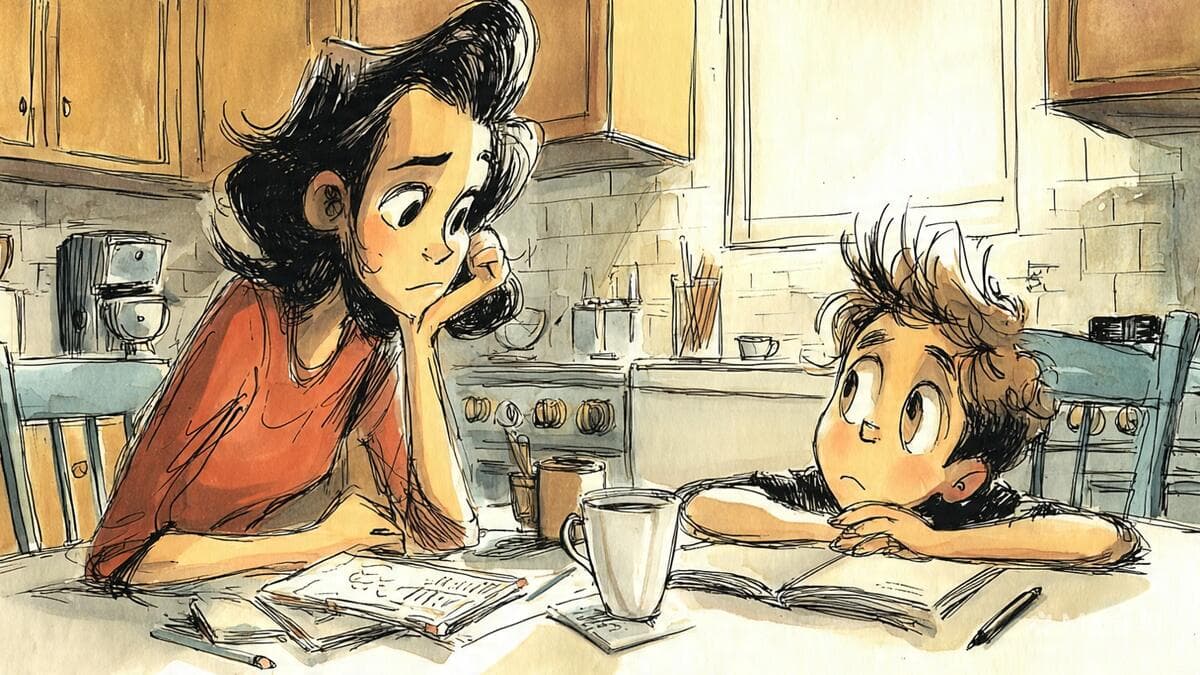
When a homeschool curriculum starts going stale, you can usually feel it before you can explain it.
The book list still looks good. The philosophy still sounds like something you believe in. The samples still remind you why you bought it. And every time you open the guide, the day gets heavier instead of clearer.
Walk through one curriculum going stale and you'll spot the pattern faster in your own house.
A real curriculum that went stale on us
Our second grader was working through Brave Writer Dart for literature, grammar, punctuation, spelling and reading comprehension. Brave Writer describes Dart as a way for kids ages 8 to 10 to enjoy literature while learning those skills. I liked the idea. The book list was inviting.
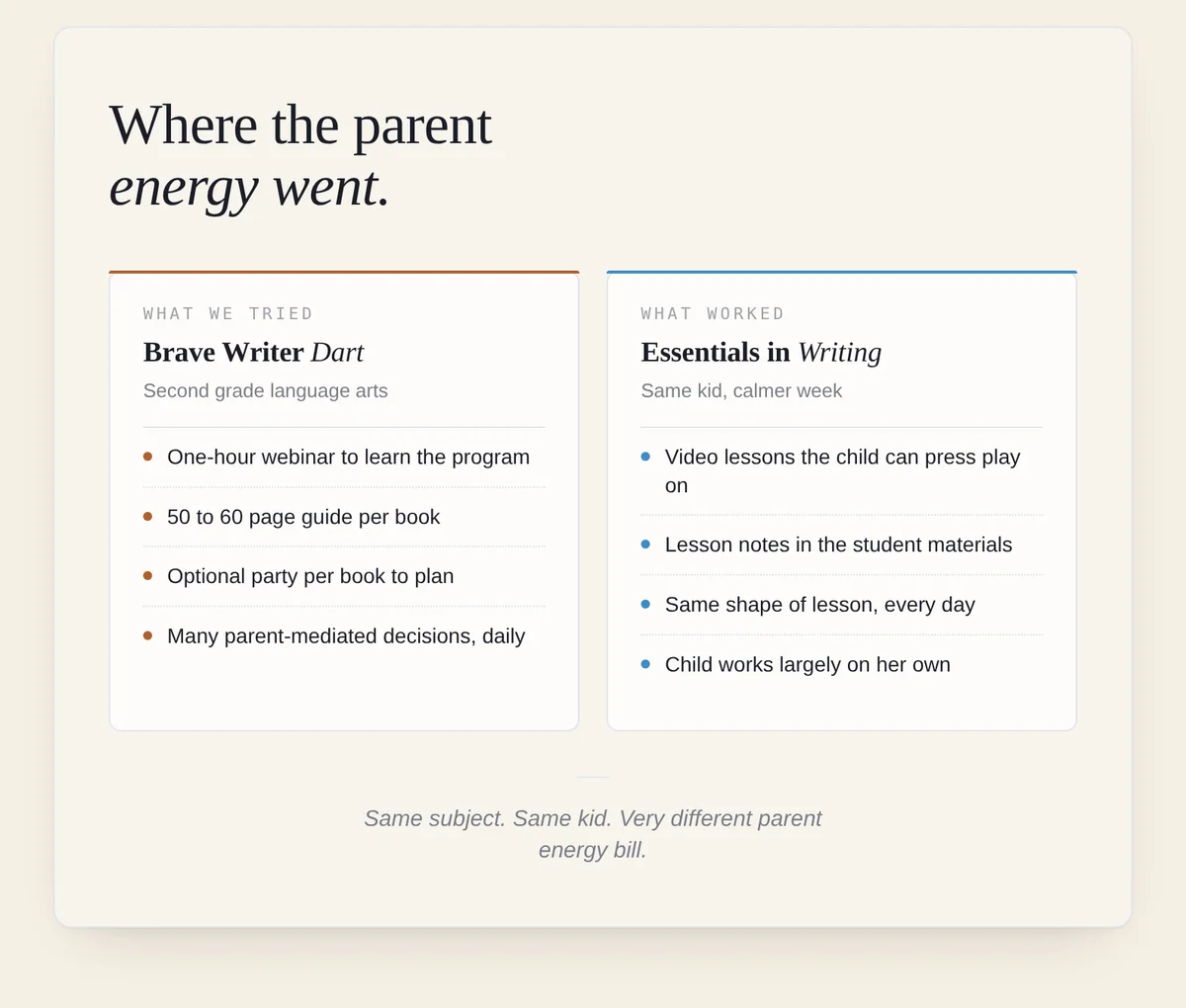
Then I attended a webinar where a full hour was needed to explain how to use the program.
That should have told me something.
Dart is flexible, almost too flexible. You can skip parts, repeat parts, take different paths through each book, and decide how deeply to use each one. Every book comes with a 50 to 60 page guide. That meant the program was a path for the child and a long interpretation project for the parent.
Dart also suggests a party to celebrate each book.
We finished book one without a party. Book two we did properly. The party was book-themed and fun. We bought copies of the book and sent them to friends ahead of time so they would get the references. It was expensive, and it was worth it as a memory.
By book three we were doing the audiobook and the curriculum guide was sliding out of use. We were busy. We skipped the party. We skipped book four. We tried book five, "Winterfrost," as a read-aloud, taking turns reading. The shared reading practice was genuinely valuable. However, the second grader did not like the story and did not want to finish the book.
That was the point where pretending the problem was a missed party or a bad week stopped working. The whole arrangement had become too parent-intensive, too open-ended and too dependent on a specific book path that was not working for that child in that season.
We switched to Essentials in Writing Level 2 SE.
The daily experience changed within a week. Essentials in Writing has video lessons. It has lesson notes in the student materials. The second grader could move through it largely on her own. Language arts stopped depending on me holding a literature study and a celebration plan together in my head.
Energy is the ultimate resource
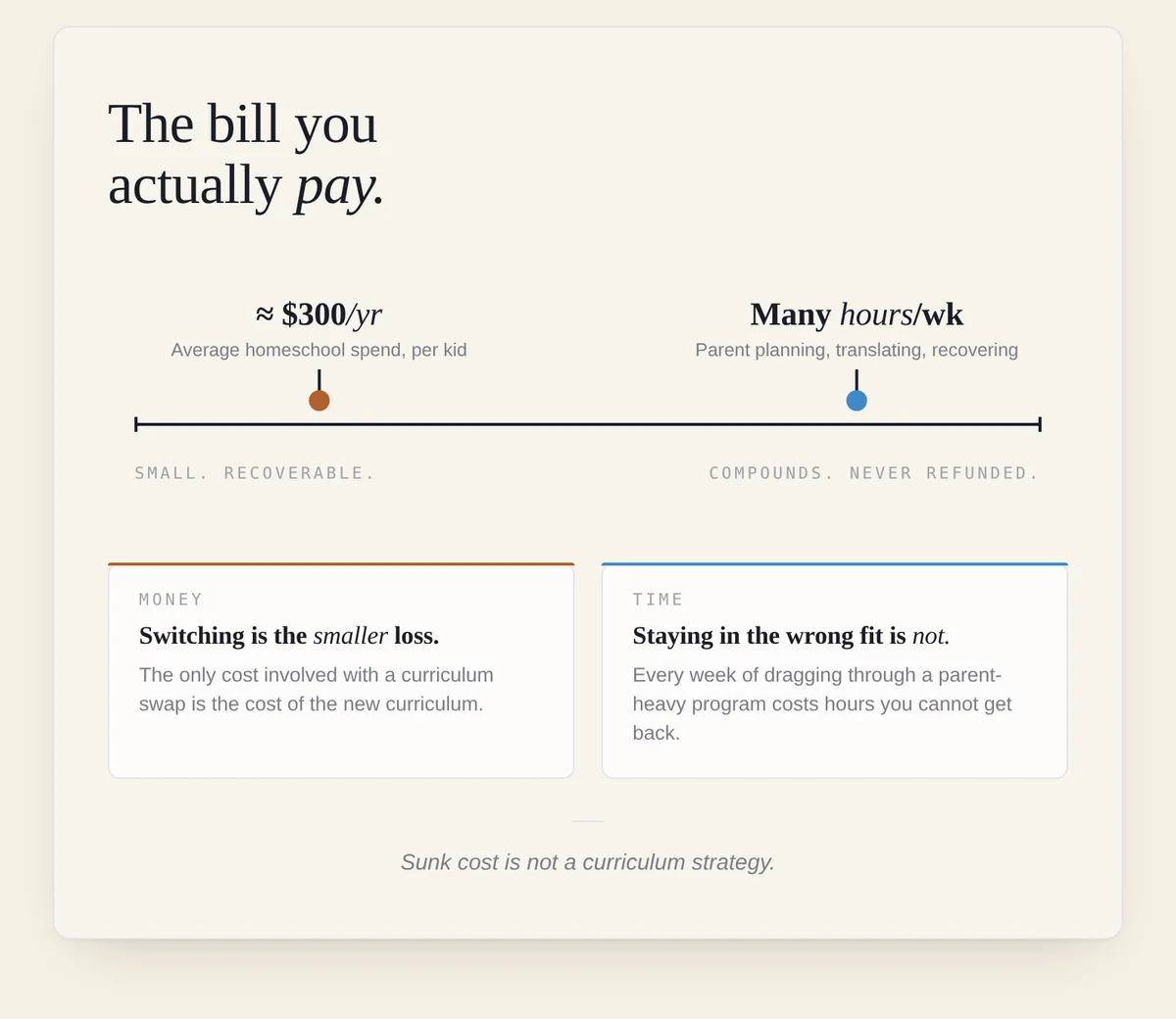
Homeschool conversations often circle around money. The average homeschool family spends about $300 per year per kid on curriculum. That number is small enough that the financial loss of switching out a curriculum is rarely the real loss. The real loss is parent energy.
A curriculum can be beautiful and still ask for too many parent hours. Rich discussions, flexible activities, optional extensions, party ideas, notebooking pages and weekly planning choices can all be good in the abstract and still be wrong for you, because you are the one who has to turn that abundance into a day your child can start.
Before you decide whether to keep going, ask how much translation the curriculum requires from you. Do you have to read ahead, choose among too many options, prepare materials and explain the whole thing before your child can begin? Can the learner see the next few steps, or does the path live mostly in your head? Does opening the guide make the day feel more possible, or does it spend energy you needed for everything else?
Energy is the ultimate resource for a homeschool parent, and you have to spend it wisely. Spending it on an open-ended curriculum that could take hundreds of parent hours per year may not be wise. Sometimes the simpler program that clearly checks the language arts box is the one that frees you to do the read-alouds, projects and rabbit trails that only you can do.
Run the curriculum. Don't let the curriculum run you.
If a program is giving you more than your family can use, the first move is to stop treating every component as required.
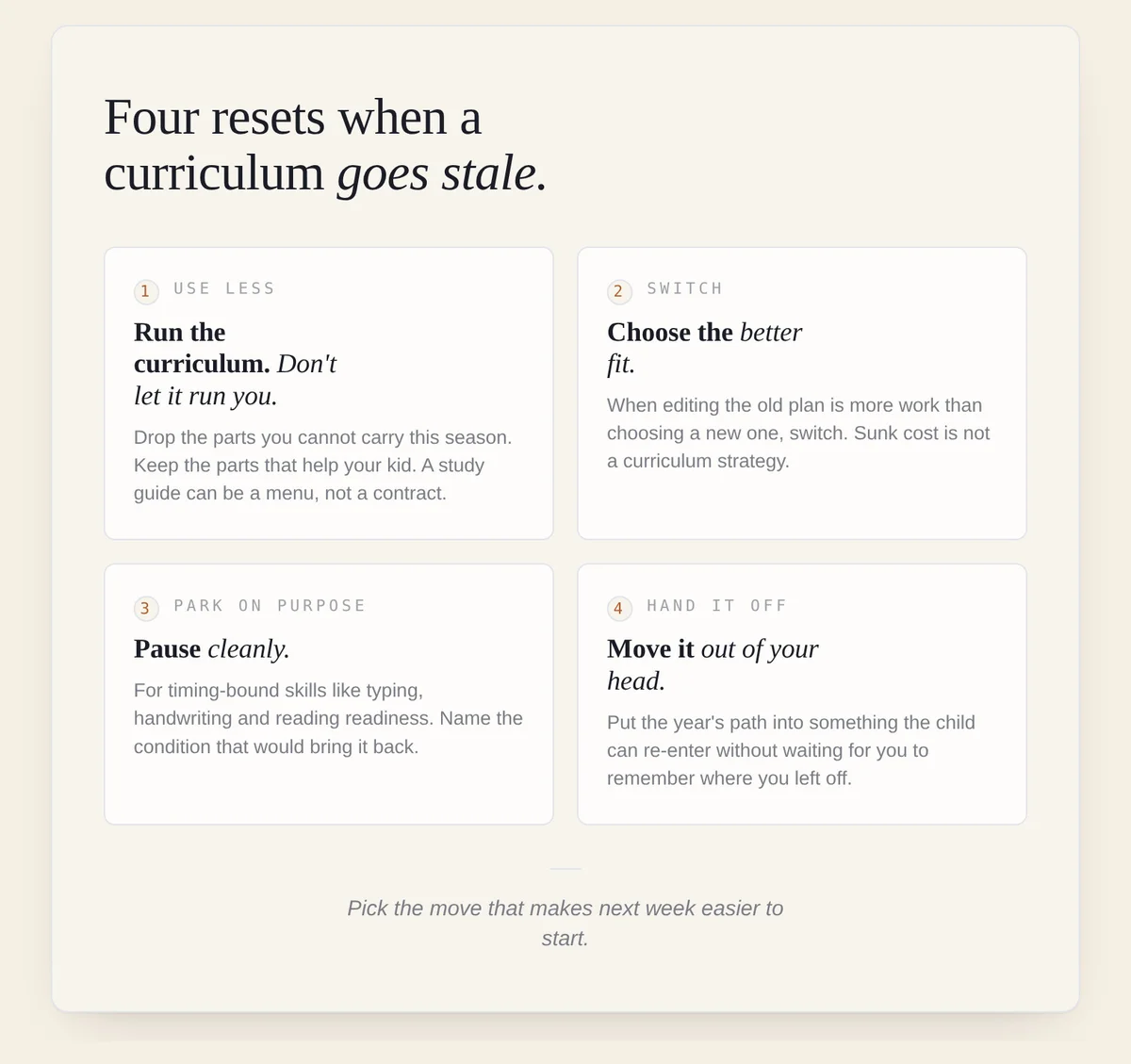
Use the book without using every page of the guide. Keep the read-aloud and drop the party. Do the grammar practice without turning the book into a month-long event. Pick the three lessons that help your kid and ignore the rest. A study guide can be a menu instead of a contract.
This is what sensible homeschool parents do quietly all the time, even if they do not say it in curriculum reviews.
Purchased curriculum feels binding because you paid for it, planned around it and pictured the kind of family rhythm it would create. The curriculum is still a tool. If using the whole tool makes the job harder, use the part that helps.
Switch the curriculum when editing the old plan is more work than choosing a better fit
Sometimes shrinking the program is not the right move. Sometimes the program itself is wrong for your family in this season.
That was the Brave Writer situation for us. We did not need a better party plan. We needed language arts to stop depending on a large, parent-mediated literature apparatus. Essentials in Writing moved the lesson structure into the child's own materials. It was easier to start, easier to repeat and easier to leave alone when the day got chaotic.
A switch is the right reset when the philosophy still sounds good but the daily workflow is wearing you out, when you have to translate every lesson before your child can begin or when you keep reviving the program mainly because it was expensive.
Sunk cost is not a curriculum strategy. The money is already gone. Your time, attention and goodwill are still being spent every week you keep trying to make the wrong thing work.
Buying a simpler thing can feel wasteful from the receipt pile's point of view. From the point of view of Tuesday morning, it is often the choice that saves the day.
Pause on purpose when the problem is timing
Some curriculum does not need to be abandoned. It needs to be parked cleanly.
Typing is a good example. Young kids with small hands do not get keyboard fluency the first time around, no matter how good the program is. Some exposure, a break, more exposure and another break works better than grinding through it. Eventually the hands fit the keyboard, the coordination shows up and they can keep their eyes on the screen instead of staring at the keys.
Manuscript and cursive handwriting work the same way. An older child often comes back to those subjects with much more control and much less drama.
A useful pause is not a guilty pile. When you pause on purpose, you know why you are stopping, what you are doing instead and what would make the curriculum worth resuming.
In Lesson Hollow, a paused curriculum stops showing up in the planning flow where tasks are chosen for the learner's Today page. If something is not active, it should not keep tugging on the day as if it were. When the child is ready, unpause it and the lessons come back exactly where you left off.
Move the curriculum out of your head
Some programs put a heavy knowing burden on the parent.
Classical Conversations can feel like this. The parent holds the week, the assignments and the rhythm. The kids rely on the parent holding it. There is a comprehensive parent portal, with deep resources, and that is the point. It is a parent portal. There is no equivalent kid-facing path.
That arrangement works when the parent is rested, focused and not juggling four other children. It gets fragile fast otherwise, because the curriculum disappears from the child's point of view the moment the adult loses the thread. Every restart begins with, "Wait, what were we doing again?"
A learner should not have to wait for the parent to reload an entire year's plan before they can begin. Lesson Hollow takes that knowing burden off the parent by putting the year's work into data the child can access one lesson at a time. The parent still guides. The parent just spends less energy remembering the path and more energy noticing the child.
What Lesson Hollow does when a curriculum goes stale
Lesson Hollow holds the moves above as ordinary product behavior.
You can see which curriculum is active right now. You can pause one without losing the record of where it stopped. You can add a replacement and have it start serving lessons immediately. If the old one becomes useful again later, you pause the new one and unpause the old one. The switch is reversible by design, because homeschool decisions are seasonal.
A curriculum that is wrong for February can be right again next fall. A child can outgrow the friction that made a program feel impossible. A flexible, parent-intensive program can belong in the parked pile while a plain, reliable one carries the current season.
The point is that the active path stays visible to the child and the paused materials stop tugging on the day.
A stale curriculum is information, not a verdict
When a curriculum goes stale, you do not have to turn it into a verdict on your homeschool.
It might be the wrong timing. The workload may be too much for this season. There may be more flexibility than your week can absorb, or a format your child has quietly outgrown. Some curriculums you are simply finished with, even if there are pages left.
Pick one stale curriculum this week and write a two-sentence status note. What is making it hard to use, and what would make next week easier? Then pick one reset: use less of it, switch it out, park it on purpose or move it out of your head.
That small decision is often enough to get your homeschool moving again.
Lesson Hollow is built for exactly that: active paths, paused curriculums and the next lesson visible to your kid, all in one place instead of in your head.